
21 July 2026

Have you been experiencing back pain, poor posture, or limited mobility? The culprit could be tight hip flexors. These muscles at the front of your hips play an important role in everyday movements like walking, running, and even sitting. When they become tight, they can lead to a cascade of problems throughout your body.
Tight hip flexors can impact anyone from employees working long hours sitting in front of a computer to athletes that regularly push their training. One of the most effective ways to combat tight hip flexors is by regularly doing mobility exercises such as stretching. These mobility exercises can help reduce pain associated with tight hip flexors while improving movement and performance.
How Tight Hip Flexors Impact Movement
Tight hip flexors can significantly change the way your body moves. When these muscles are shortened, they restrict hip extension—an essential component of walking, running, and standing tall. This limitation can lead to shorter strides, a forward-tilted posture, and reduced glute activation, making movements feel less powerful and efficient.
As your body adapts, other muscles like the lower back and hamstrings begin to compensate, which can create imbalances and added strain. In workouts, this often shows up as limited depth in squats, excessive arching in the lower back during lifts, or instability during single-leg movements. Over time, these altered movement patterns not only impact performance but can also increase stress on joints, making both everyday activities and exercise feel harder.
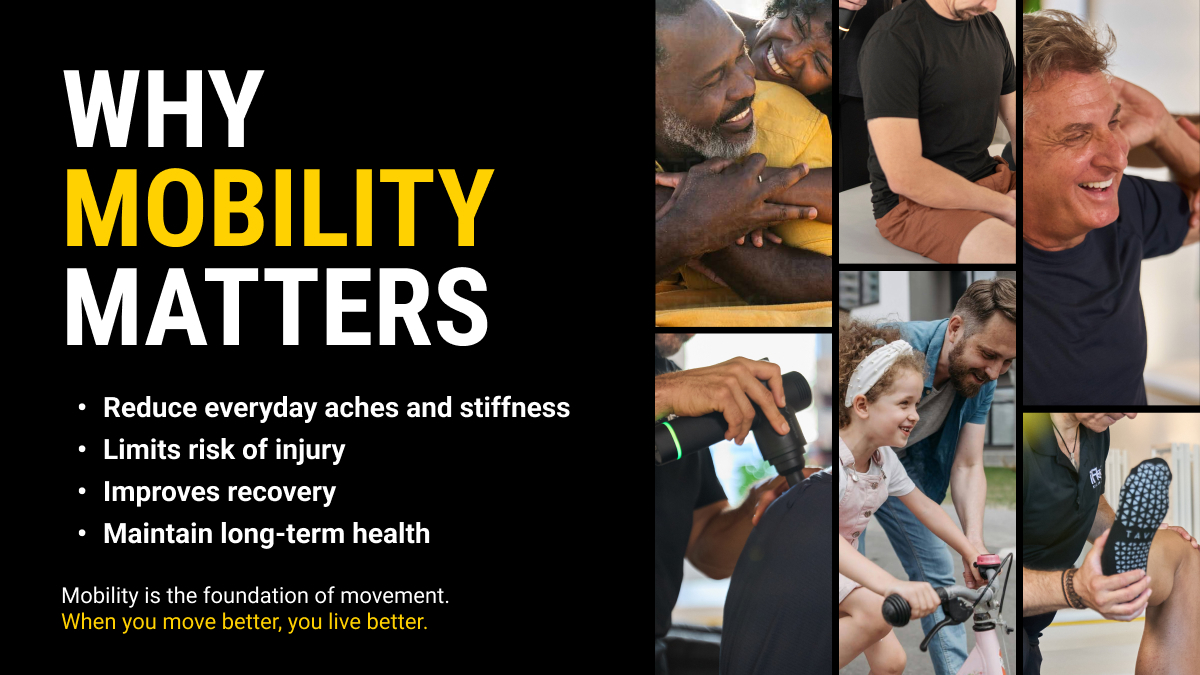
What Causes Tight Hip Flexors (and How to Fix Them)
Tight hip flexors are very common, and can easily be caused by patterns that easily go unnoticed.
Common causes:
-
Prolonged sitting (desk work, driving, screen time)
-
Low overall movement or lack of mobility work
-
Repetitive activities like running or cycling that keep hips in a shortened position
-
Poor posture habits over time
Why it happens
These patterns keep the hip flexors in a constantly shortened state, causing them to tighten, and become overactive, limiting your range of motion.
How mobility exercises help:
-
Lengthen and release tight hip flexor muscles
-
Restore healthy range of motion in the hips
-
Improve muscle balance and reduce compensation patterns
-
Support better posture and more efficient movement
One of the best mobility exercises for relieving tight hip flexors is stretching. With consistent stretching, you can relieve built-up tension, move more freely, and improve both everyday comfort and workout performance.
Effective Hip Flexor Stretches
You can start relieving tight hip flexors with easy stretches at home. Try these 4 stretches to help you get started.
Kneeling Hip Flexor Stretch:
-
Kneel on one knee with the other leg bent in front of you
-
Keep your back straight and gently push your hips forward until you feel a stretch in the front of your hip.
-
Hold for 30 seconds and repeat on the other side
Lunge Stretch:
-
Step forward into a lunge position
-
Keep your front knee bent at a 90-degree angle and your back knee on the ground.
-
Gently lean forward until you feel a stretch in the front of your hip
- Hold for 30 seconds and repeat on the other side
Pigeon Pose:
-
Begin in a tabletop position
-
Bring one knee forward towards your wrist, and extend the other leg back
-
Gently lower your hips towards the ground
- Hold for 30 seconds and repeat on the other side
Reclining Hip Flexor Stretch:
-
Lie on your back with one knee bent and the other leg extended
-
Loop a strap or towel around the foot of the bent leg
-
Gently pull the leg towards your chest until you feel a stretch in the front of your hip
- Hold for 30 seconds and repeat on the other side
Maximize the Benefits with Personalized Mobility Exercises
Mobility exercises such as stretching are most effective when personalized to a person’s existing needs and future goals. This is why assisted stretching has become a favorite for athletes, fitness enthusiasts, and those wanting to elevate their day-to-day living.
Assisted stretching is a form of stretching where a professional such as a Flex Specialist assists a client through a series of stretches. The stretch professional does all the work of positioning the client’s body into a stretch, while actively and safely pushing the body into a deep stretch to help enhance the benefits that often cannot be achieved when stretching on your own.
At iFlex Stretch Studios, we specialize in using advanced technology and techniques to create personalized stretch programs for every client. Our trusted Flex Specialists can determine the stretches needed to best address your tight hip flexors and help you move and feel better.
Want to find relief and start moving with more ease? Right now, you can try an iFlex near you and get 50% off your first stretch. Just click the button below to get started.